Greetings in German
- Hallo - Hello
Hallo is a commonly used German greeting that is equivalent to "hello" in English. It is a versatile and informal greeting suitable for both casual and formal settings. - Guten Morgen - Good morning
Guten Morgen is used to greet someone in the early hours of the day. It is a polite and friendly way to start the day. - Guten Tag - Good day
This is a standard greeting used throughout the day. - Guten Abend - Good evening
This is used to greet someone in the evening or late afternoon. - Servus - Hi/Bye
Servus can be used to say both "hi" and "bye" and is commonly used among friends and acquaintances. - Grüß Gott - Greetings to God
Grüß Gott is a regional greeting predominantly used in Southern Germany and Austria. It is a respectful way of saying hello. - Moin - Hi
Moin is a common greeting used in Northern Germany, particularly in Hamburg and the surrounding regions. It is an informal way of saying "hi" and is used throughout the day. - Wie geht es Ihnen? - How are you?
This is a formal way of inquiring about someone's well-being. It is a polite and considerate way to start a conversation. - Auf Wiedersehen - Goodbye
This phrase is a standard farewell used in German. It is a formal and respectful way to part with someone. - Tschüss - Bye
Tschüss is suitable for both informal and formal settings and is widely recognized across Germany.
Introductions in German
When meeting new people, it's standard to introduce yourself. Below are common words and phrases to use when introducing yourself, especially when trying to make friends in a German-speaking country.
- Mein Name ist... - My name is...
- Wie heißt du? - What is your name?
- Schön dich kennenzulernen - Nice to meet you
- Woher kommst du? - Where are you from?
- Ich komme aus... - I come from...
- Wie geht es dir? - How are you?
- Es freut mich, dich kennenzulernen - I'm pleased to meet you
- Darf ich mich vorstellen? - May I introduce myself?
- Schön, dich wiederzusehen - Nice to see you again
Basic Phrases in German
Here are some basic phrases for various situations.
- Danke - Thank you
- Bitte - Please
This word has multiple meanings, including "please" and "you're welcome," depending on the context. - Entschuldigung - Excuse me
This can be used to apologize or to get someone's attention politely, as with the English "excuse me." - Wie geht es Ihnen? - How are you?
- Ja - Yes
- Nein - No
- Ich verstehe nicht - I don't understand
This phrase is useful when you need to clarify the meaning of a German word or phrase, or ask the speaker to repeat or rephrase something. - Wo ist...? - Where is...?
- Wie viel kostet das? - How much does it cost?
- Ich möchte... - I would like...
- Ich liebe dich - I love you
This phrase is particularly good to know if you have a partner or loved ones that speak German.
Ordering Food and Drinks in German
- Speisekarte - Menu
- Bestellung - To order
- Vorspeise - Appetizer
- Hauptgericht - Main course
- Getränk - Drink
- Kellner/Kellnerin - Waiter/Waitress
- Dessert - Dessert
- Rechnung - Bill
Asking for Directions in German
- Wie komme ich zu...? - How do I get to...?
- Straße - Street
- Links - Left
- Rechts - Right
- Geradeaus - Straight ahead
- Kreuzung - Intersection
- Ampel - Traffic light
Shopping in German
- Einkaufen - Shopping
- Geschäft - Store
- Einkaufszentrum - Shopping center
- Kleidung - Clothing
- Schuhe - Shoes
- Lebensmittel - Groceries
- Kasse - Cashier/checkout
- Rabatt - Discount
- Umtausch - Exchange
Emergencies in German
- Notfall - Emergency
- Hilfe - Help
- Feuer - Fire
- Unfall - Accident
- Krankenwagen - Ambulance
- Polizei - Police
- Krankenhaus - Hospital
- Verletzung - Injury
- Gefahr - Danger
- Rettung - Rescue
18 Common German Nouns
Here are some useful German nouns.
- Haus - House
- Auto - Car
- Stadt - City
- Schule - School
- Buch - Book
- Katze - Cat
- Hund - Dog
- Wasser - Water
- Essen - Food
- Kind - Child
- Familie - Family
- Zeitung - Newspaper
- Apfel - Apple
- Baum - Tree
- Arzt - Doctor
- Tisch - Table
- Bett - Bed
- Kaffee - Coffee
18 Useful German Verbs
Here are 18 useful German verbs.
- Sein - to be
- Haben - to have
- Gehen - to go
- Kommen - to come
- Machen - to do/make
- Sehen - to see
- Wollen - to want
- Können - to be able to
- Müssen - to have to/must
- Sagen - to say
- Geben - to give
- Nehmen - to take
- Wissen - to know
- Finden - to find
- Denken - to think
- Fühlen - to feel
- Sprechen - to speak
- Leben - to live
Why Learn German
Frequently Asked Questions
What is some German vocabulary?
Some common German vocabulary includes greetings like Guten Tag ("Good day") and Auf Wiedersehen ("Goodbye"), common German phrases such as Bitte ("Please") and Danke ("Thank you"), and practical expressions like Wo ist die Toilette? ("Where is the restroom?"). These are some of the most common German words and phrases that tourists will learn so they can navigate life in Germany.
How can I master German vocabulary?
How many words are in A1 German?
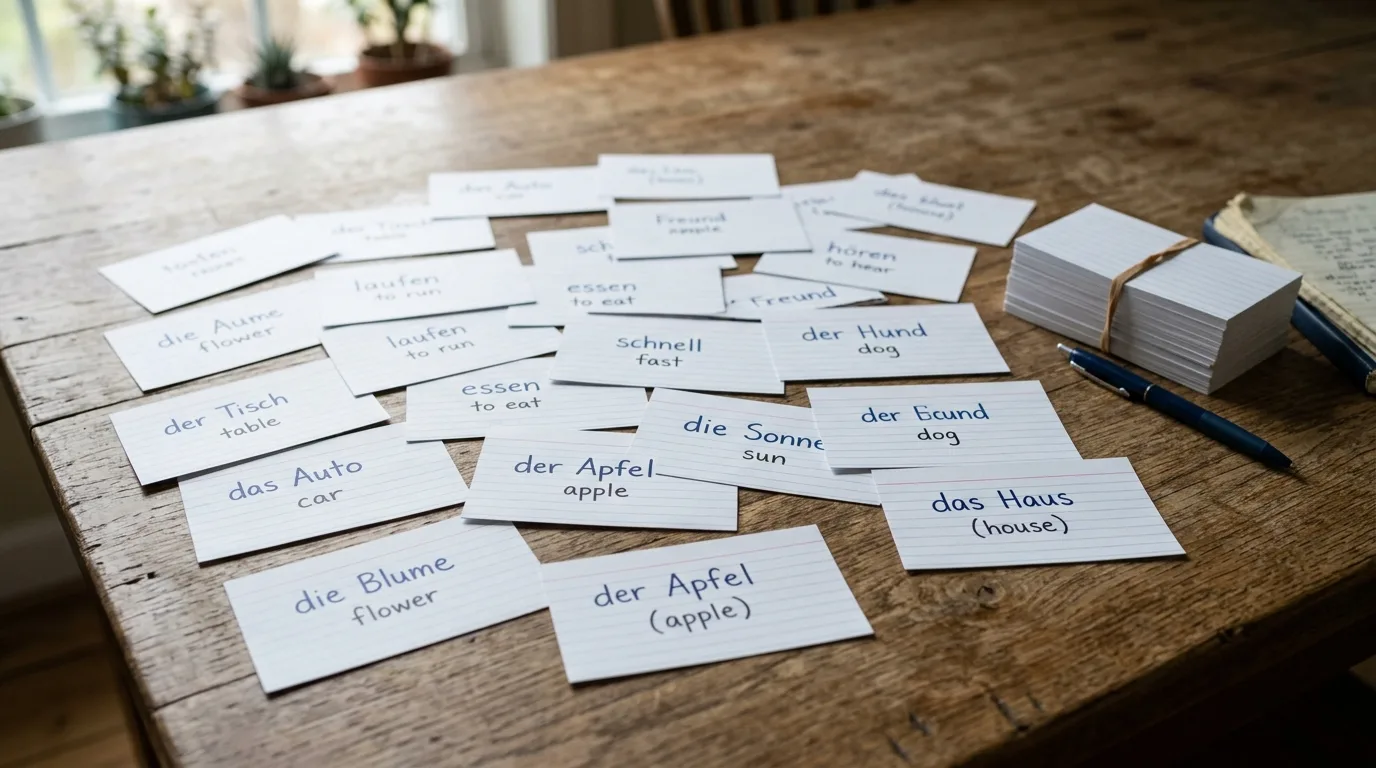
How can I memorize German words fast?
able associations or visualizations for each word. By consistently using these strategies and engaging in regular practice, you can enhance your ability to memorize German words rapidly.
Summary: German Words and Phrases to Learn for Travel
Congratulations. You've now acquired a solid foundation of German words and phrases to elevate your travel experience.
Armed with basic German vocabulary words and common German words for greetings, introductions, ordering food, asking for directions, and handling emergencies, you'll feel more confident engaging with native German speakers during your trip.
So, pack your bags, venture into the German-speaking world, and embark on an unforgettable journey filled with new encounters, delicious food, and fascinating discoveries.